Review: Watercolor Christmas Cottage PNG Clipart
As an embroidery designer who has spent years translating digital art into thread, I approach every new asset with a mix of excitement and skepticism. We have all been there: you find a beautiful graphic online, envision it perfectly stitched on a holiday sweatshirt, only to realize later that the details are too fine for the hoop or the color gradients will turn into a muddy mess under the needle. This is why I took a close, practical look at the Watercolor Christmas Cottage PNG Clipart. This isn’t just about whether the image looks pretty on a screen; it is about how it performs as a functional component in real-world embroidery projects.
The First Impression: Mood and Visual Personality
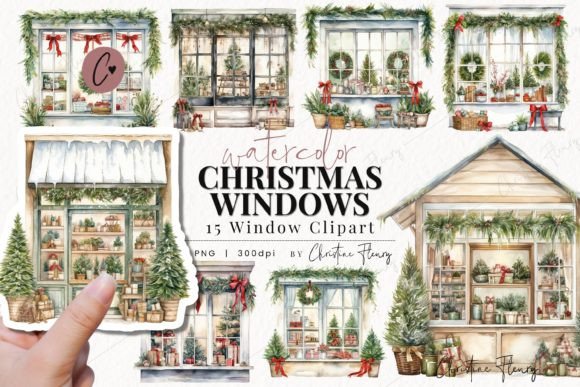
The immediate appeal of this Illustrations piece lies in its softness. Unlike vector-based clipart with hard, unforgiving lines, the watercolor aesthetic offers a gentle, organic feel that translates beautifully into textile arts. The cottage motif evokes nostalgia, warmth, and the quiet charm of a winter evening. For a designer, this mood is crucial. It dictates where the design belongs. You wouldn’t put this on a high-performance athletic jersey, but it fits seamlessly into the world of cozy home decor and comfortable apparel.
The layout typically features a central structure—often a quaint house with snow-dusted roofs—surrounded by subtle hints of winter foliage or falling snow. The visual personality is understated yet distinct. It does not shout for attention; rather, it invites a closer look. This subtlety is a double-edged sword in embroidery. It allows for elegant, sophisticated finished products, but it demands careful handling of thread colors and stitch density to ensure the image doesn’t disappear into the fabric.
Real-World Application: From Screen to Stitch
To truly evaluate the Watercolor Christmas Cottage PNG Clipart, I imagined a specific scenario: preparing a custom order for a boutique client who wants personalized holiday gifts. The request was for a set of linen tea towels and a heavy-weight cotton tote bag. This is where the rubber meets the road. Using this clipart as a reference for digitizing or as a printed transfer for hand embroidery requires understanding how watercolor textures behave when converted into satin stitch, fill stitch, or running stitch patterns.
For the tote bag, the larger surface area allows the design to breathe. The soft edges of the watercolor style can be mimicked using varied stitch lengths and directional fills, creating a painterly effect that feels handmade and artisanal. On the linen tea towels, however, the challenge increases. Linen has a visible weave, which can interfere with small details. If the cottage windows or door details are too tiny in the source image, they may get lost or cause thread breaks during stitching. In this context, the design works best when simplified, focusing on the silhouette of the cottage and the broader washes of color rather than intricate architectural details.
Apparel and Wearable Art
When considering custom apparel, such as a sweatshirt embroidery project, the clipart shines. The cozy aesthetic aligns perfectly with the texture of fleece or French terry fabric. Here, the design can be scaled up to fill the chest or back area, allowing for richer color blending. However, one must be cautious with stretchy fabric. If the design is dense, it can pucker the material. Using a cut-away stabilizer is non-negotiable here to maintain the integrity of the image after washing. For baby embroidery items like onesies or blankets, the softness of the watercolor theme is ideal, but the stitch count must be kept low to avoid irritating sensitive skin. A simple outline with minimal fill might be the smarter choice for these smaller, delicate items.
Navigating Technical Challenges
While the artistic merit is high, there are areas where the Watercolor Christmas Cottage PNG Clipart requires careful navigation. The primary concern is detail resolution. Watercolor effects rely on bleeding colors and soft transitions. In embroidery, we do not have infinite resolution; we have threads. If you attempt to replicate every subtle shade change, you risk creating a stiff, cardboard-like patch on your fabric. This is particularly problematic on curved surfaces like caps, where stiffness leads to distortion.
Another critical factor is fabric texture and color. This design relies on light, pastel, or muted tones. Placing it on dark fabric without proper underlay or backing will result in poor visibility. You would need to use a white or light-colored base layer, which adds bulk. Conversely, on thin or lightweight fabrics, the density required to capture the watercolor look might cause puckering. It is essential to test the design on scrap fabric first. Check how the hoop size affects the placement. If the cottage is wide, ensure your hoop can accommodate it without re-hooping, which can misalign the design.
Commercial Viability and Brand Consistency
For Etsy sellers and small shop product creators, this clipart offers significant commercial potential. Holiday-themed items consistently perform well in the fourth quarter. The nostalgic feel of the cottage appeals to buyers looking for traditional, heartfelt personalized gift options. However, brand consistency is key. If your shop specializes in modern, minimalist geometric designs, this watercolor cottage might feel out of place. It fits best with brands that emphasize rustic, farmhouse, or vintage aesthetics.
Using this asset in printable mockup previews can also boost buyer engagement. Showing the design on a realistic mockup of a pillow cover or apron helps customers visualize the finished product. This reduces return rates and increases perceived value. Remember, customers are not just buying an embroidered item; they are buying the feeling the design evokes. The watercolor cottage sells comfort and tradition.
Practical Designer Notes for Success
Before you commit to production, keep these practical tips in mind:
- Test on Scrap Fabric: Always run a test stitch-out on the same type of fabric you plan to use for the final product. This reveals issues with tension, density, and color contrast.
- Check Thread Color Contrast: Watercolor designs often use similar shades. Ensure there is enough contrast between the cottage, the snow, and the background so the image doesn’t look flat.
- Review Stitch Density: High density can make the fabric stiff. Adjust your digitizing settings to use lighter fills where possible, especially for the sky or snow areas.
- Confirm Hoop Size: Measure the design dimensions against your machine’s maximum hoop size. Do not assume it will fit; measure twice.
- Inspect Small Details: Zoom in on the digital file. Are there tiny specks or lines that will become nuisance stitches? Clean up the design before digitizing.
- Use Proper Stabilizer: Match the stabilizer to the fabric. Cut-away for knits, tear-away for wovens, and wash-away for delicate or textured materials.
- Verify Licensing: If you plan to sell items made with this design, confirm the license terms. Ensure it allows for commercial embroidery and sale of physical goods.
In conclusion, the Watercolor Christmas Cottage PNG Clipart is a versatile and evocative asset for the right project. It excels in creating warm, inviting holiday items that resonate with customers seeking authenticity and charm. By respecting the technical limitations of embroidery and adapting the design to suit the fabric and product type, you can transform this digital illustration into a stunning tangible product. Whether you are creating a single embroidered patch for a friend or a full line of holiday embroidery for your shop, this design offers a solid foundation for creative success.